
Nordic-Baltic Hydrogen Corridor
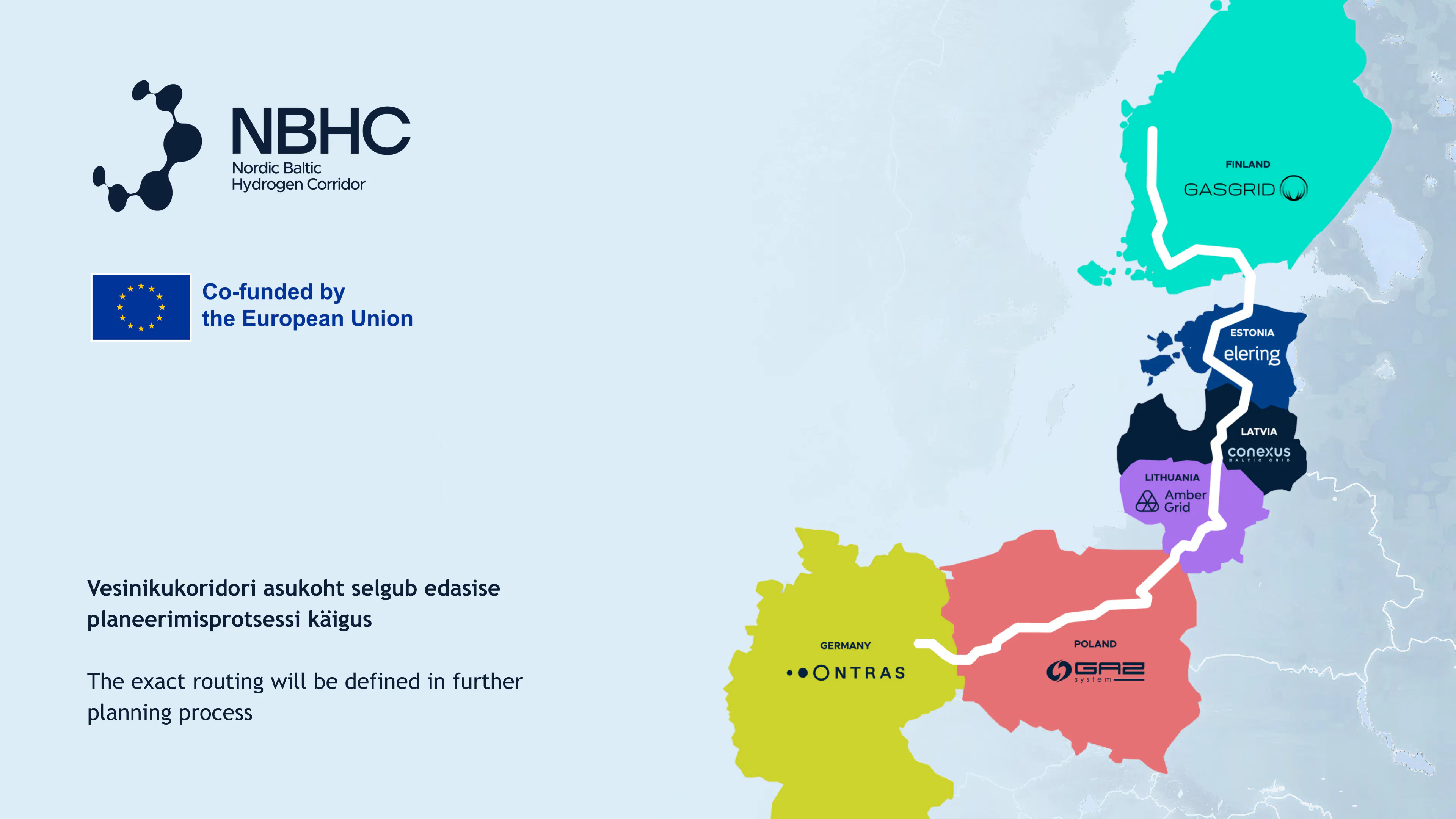
The Nordic-Baltic Hydrogen Corridor is a hydrogen transmission infrastructure project that would enable the transport of hydrogen via a pipeline in Finland, Estonia, Latvia, Lithuania, Poland, and Germany. Parties to the project are six gas system operators: Gasgrid, (Finland), Elering (Estonia), Conexus Baltic Grid (Latvia), Amber Grid (Lithuania), Gaz System (Poland), and ONTRAS (Germany). The Nordic-Baltic Hydrogen Corridor will enable the connection of hydrogen production, consumption and storage points in the Baltic Sea region, establishing a common regional hydrogen system and market.
Why is the hydrogen corridor needed
In recent years, European energy policy has undergone a significant shift. Russia’s aggression against Ukraine and the subsequent energy crisis clearly demonstrated how vulnerable an energy system can be when it depends on individual suppliers or supply chains. As a result, one of the European Union’s key objectives is to diversify energy sources, strengthen cross-border connections, and develop infrastructure that allows energy to be flexibly directed to where it is needed at any given moment. From this perspective, hydrogen infrastructure is an important component of strengthening Europe’s energy security.
The Nordic-Baltic Hydrogen Corridor is an international project aimed at developing a hydrogen pipeline connecting Finland, Estonia, Latvia, Lithuania, Poland, and Germany. In the future, this would enable hydrogen to be transported between countries in a similar way to how natural gas and electricity are transmitted today. The project would connect hydrogen production areas, consumers, and storage facilities into a unified regional network, creating the foundation for a new hydrogen market in the Baltic Sea region.
For Estonia, the project would provide an opportunity to become part of Europe’s future hydrogen transmission network and generate transit revenue. In addition, it would establish core hydrogen infrastructure in Estonia, allowing local producers and consumers to connect to the network in the future. This would create new development opportunities for businesses, support incoming investments, and contribute to the creation of higher value-added jobs.
Nordic-Baltic Hydrogen Corridor
Spatial Planning in Estonia
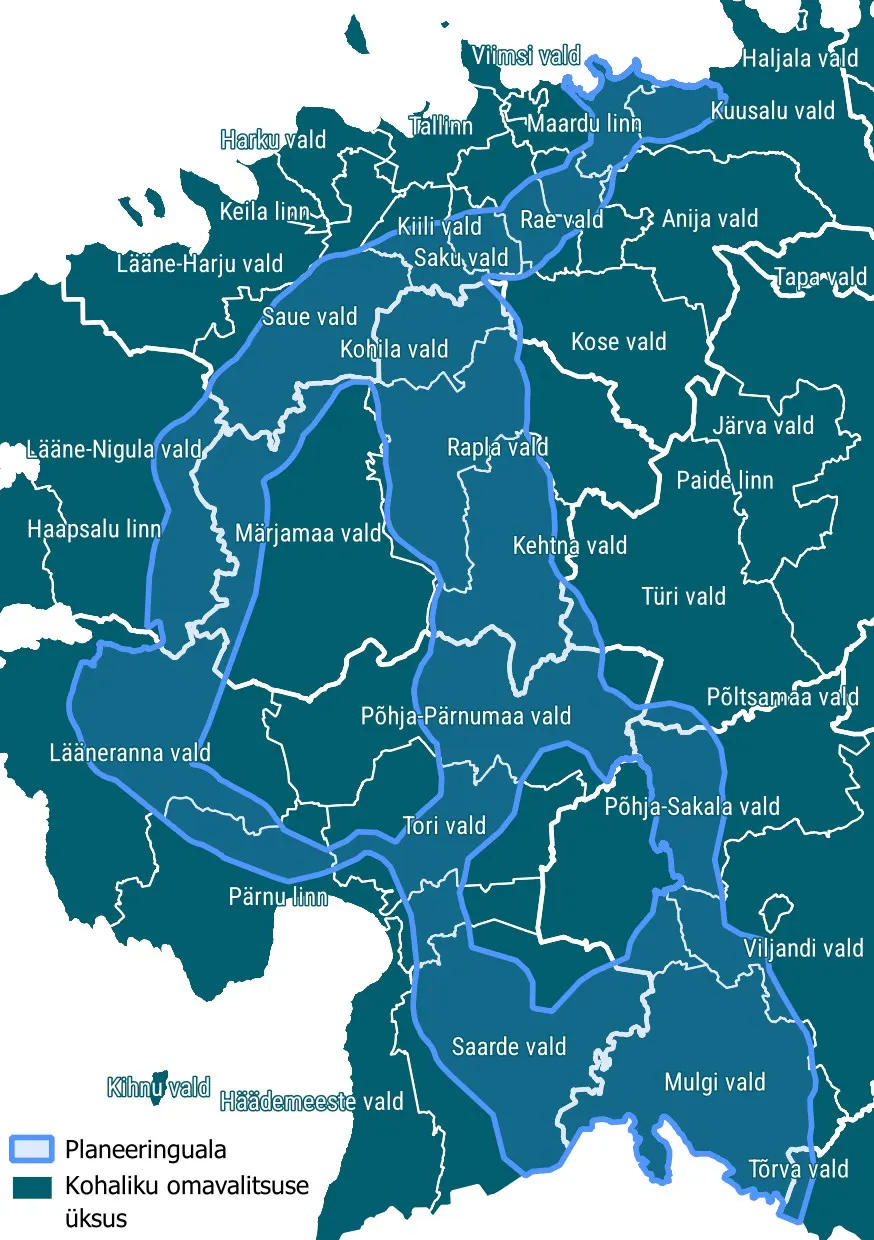
The planning process will determine whether, and under what conditions, it would be feasible to develop an underground hydrogen transmission pipeline across Estonia connecting Finland and Germany. This would provide Estonia with access to the transmission infrastructure, creating potential economic and strategic value. The estimated duration of the planning process is up to three years.
The development of the route would create the necessary preconditions for connecting Estonia to the Nordic and Central European hydrogen market, while also strengthening energy security and security of supply. The new infrastructure would open up new investment opportunities in both the energy sector and industry.
Project stages
Project stages
The pre-feasibility study conclusions
The Nordic and Baltic region has significant renewable hydrogen potential identified within the pre-feasibility study at approx. 27.1 million tons of renewable hydrogen production (based on combined onshore and offshore wind and solar power) by 2040. This provides a great opportunity for hydrogen market creation and export potential towards continental Europe that is to be addressed by the NBHC.
By 2040, the Corridor is projected to annually transport up to 2.7 million tons of renewable hydrogen to the countries along its route. The pre-feasibility study indicated that the NBHC can be one of the first operational cross-border hydrogen pipelines in Europe. The NBHC pipeline is currently planned to be 48 inches (1,200 mm) in diameter and approx. 2,500 km in length.
The feasibility study
Based on the pre-feasibility study results, in the second half of 2024 the Nordic-Baltic Hydrogen Corridor project partners have commenced work on the feasibility study covering detailed analysis of the technical, commercial and economic aspects of the project.
Further steps
The results will determine further steps in the project implementation and future perspectives for the construction of a new cross-border hydrogen corridor.
Strategically crucial for the future of EU energy infrastructure – Nordic-Baltic Hydrogen Corridor receives CEF funding
The project promoters of the Nordic Baltic Hydrogen Corridor (NBHC) Finland’s Gasgrid vetyverkot Oy, Estonia’s Elering, Latvia’s Conexus Baltic Grid, Lithuania’s Amber Grid, Poland’s GAZ-SYSTEM, Germany’s ONTRAS and the European Climate, Infrastructure and Environment Executive Agency (CINEA) signed a grant agreement for the European Union (EU) financial support to the NBHC on 1st of July, 2025.
European projects of common interest announced on 28 November 2023
Information in different languages

Co-Funded by the European Union. Views and opinions expressed are however those of the author(s) only and do not necessarily reflect those of the European Union or CINEA. Neither the European Union nor the granting authority can be held responsible for them.
